
Move Against Cancer Africa | February 2026
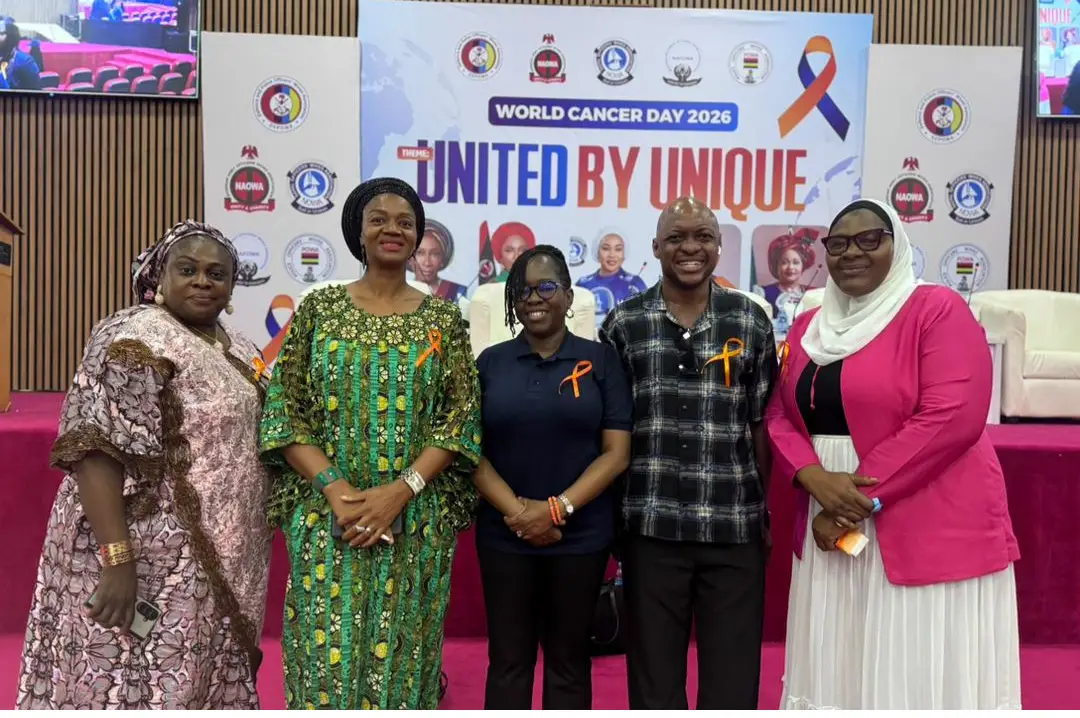
On 4 February 2026, in commemoration of World Cancer Day, Nigeria’s leading military and paramilitary women associations: the Nigerian Army Officers’ Wives Association (NAOWA), Naval Officers’ Wives Association (NOWA), Nigerian Air Force Officers’ Wives Association (NAFOWA), and Defence and Police Officers’ Wives Association (DEPOWA) convened a high-level cancer awareness and advocacy engagement at the Nigerian Army Conference Centre in Abuja. The programme was conceived and led entirely by these associations as part of their institutional commitment to safeguarding the health and wellbeing of service families. Move Against Cancer Africa (MACA) served as technical partner, supporting the development of the official communiqué and policy white paper that emerged from the engagement.
From the outset, the tone was clear: this was not a ceremonial gathering but a strategic dialogue on system reform. In her opening address, the President of DEPOWA, Mrs Mernan Femi-Kayode emphasised that cancer is not merely a medical diagnosis; it is a family and community crisis with emotional, social, and financial consequences. Within military and paramilitary communities, where families often function under unique pressures, the impact of a cancer diagnosis can be especially destabilising. She called for strengthened oncology infrastructure within defence health systems, improved coordination of care across formations, and sustained awareness programmes that move beyond one-off outreach activities toward institutionalised action.
The technical session, delivered by Dr. Shagaya Uchechukwu under the theme “United by Unique: Why People-Centred Cancer Care Matters,” provided an evidence-based overview of prevention, early detection, risk profiling, and treatment pathways. Her central message resonated strongly: cancer is not a death sentence, and early detection significantly improves survival outcomes. She clarified practical concerns around mammography, particularly for breastfeeding mothers and younger women with dense breast tissue, emphasising the importance of age-appropriate and risk-based screening approaches. She also addressed high-risk categories, noting that while a minority of cancers are linked to hereditary genetic factors, the majority are associated with modifiable lifestyle and environmental risks. Prevention, therefore, is both possible and urgent.
The interactive dialogue that followed revealed deeper behavioural realities. Live polling showed that fear and myths remain the most significant barrier to seeking care, surpassing even financial constraints. A substantial proportion of participants admitted that they had previously believed cancer to be a death sentence, that chemotherapy kills, or that biopsy spreads cancer. These fatalistic perceptions help explain why late presentation remains common. What appears to be delayed care is often rooted in misinformation and stigma rather than mere access gaps. The findings highlighted the need for sustained myth-busting communication tailored to defence communities.
Financial toxicity, however, remains a powerful systemic challenge. Participants identified out-of-pocket expenditure, limited insurance coverage, and indirect costs such as transportation and time away from duty as major burdens that can delay treatment or interrupt care. Cancer, as the discussions revealed, is not a single medical episode but often a prolonged economic stressor, particularly in cases of recurrent disease requiring multiple surgeries or extended chemotherapy.
The human dimension of these findings was powerfully reinforced during a survivor panel session. One survivor recounted how an initial fibroid diagnosis was later confirmed as ovarian cancer, and how fear led her to delay chemotherapy while seeking alternative remedies before eventually returning to structured oncology care. With adherence to evidence-based treatment and strong family support, she achieved recovery. Another survivor described a decade-long battle with recurrent brain tumours, multiple surgeries, and ongoing chemotherapy, highlighting the profound financial strain of chronic cancer care. Their testimonies transformed statistics into lived reality and reinforced an important poll finding: survivors are regarded as the most credible and persuasive voices in cancer advocacy.
Beyond awareness, the engagement focused on structured solutions. A defence-specific access and cost reduction framework was presented, outlining a four-pillar strategy centred on routine screening and early detection, timely and complete treatment, expanded access through insurance-linked programmes such as the National Health Insurance Scheme (NHIS) and the integration of structured support groups as psychosocial “force multipliers.” Complementing this, a cost reduction action plan emphasised early enrolment in Health Maintenance Organisations (HMOs), improved insurance literacy, and collective negotiation mechanisms by associations to secure subsidised diagnostic and treatment packages for members. Together, these approaches represent a shift from reactive, crisis-driven expenditure to proactive pooled risk protection and coordinated financial planning.
Demographically, the engagement reached its intended audience. The majority of participants were drawn from the core military and paramilitary associations, and most fell within the 26–50 age bracket, aligning with recommended screening windows for breast and cervical cancer. This demographic alignment strengthens the case for institutionalising annual joint screening programmes across defence women’s associations.
The overarching conclusion from World Cancer Day 2026 is clear: effective cancer control within military and paramilitary communities requires integrated reform. Behavioural change communication must confront myths and stigma. Insurance protection must be strengthened to reduce financial toxicity. Early referral and diagnostic pathways must be streamlined to prevent misclassification and delays. Survivor advocacy should be formally embedded within awareness platforms. Screening must become routine rather than exceptional.
Above all, the engagement demonstrated strong institutional willingness to act. An overwhelming majority of participants expressed support for institutionalising a recurring, coordinated cancer initiative across defence women’s associations. This collective resolve signals readiness to move from conversation to continuity. For Move Against Cancer Africa (MACA), this engagement represents far more than a commemorative gathering. It is a bold blueprint for system-level reform, one grounded in data, lived experience, and practical financing strategies. It affirms that cancer control cannot rely solely on awareness campaigns.
It must be anchored in structured screening systems, financial protection mechanisms, survivor-led advocacy, strengthened referral pathways, and sustained institutional commitment.
Cancer is not a death sentence. But fear, misinformation, delayed escalation, and catastrophic out-of-pocket spending can be. World Cancer Day 2026 has laid a solid foundation for confronting these realities within defence communities, not through isolated outreach activities, but through coordinated, institutionalised, and measurable action.
Call To Action
The engagement outlines a clear and practical pathway forward:
- Institutionalise annual joint cancer screening programmes across military and paramilitary women associations to ensure continuity rather than one-off events. These programmes should adopt risk-stratified and age-appropriate screening protocols, including alternatives for younger and breastfeeding women.
- Strengthen behavioural change communication to dismantle myths, fatalistic beliefs, and stigma that delay care. Also, scale up HPV and Hepatitis B vaccination as primary cancer prevention strategies.
- Formalise survivor advocacy platforms, recognising survivors as the most credible drivers of behavioural change.
- Expand financial protection mechanisms, including early Health Maintenance Organisation (HMO) enrolment, improved insurance literacy, and structured access to schemes such as National Health Insurance Scheme (NHIS) and other Civil Society Organisation-led initiatives.
- Enhance early referral and diagnostic escalation systems within the defence medical services to prevent misclassification and minimise delays in obtaining specialist assessment. Integrate structured patient navigation and psychosocial support systems within the referral pathways.
Sustainable cancer control within military and paramilitary communities is achievable, but only if behavioural reform, financial protection, survivor empowerment, and institutional accountability move forward together.
At MACA, we remain committed to ensuring that the communiqué from this event does not remain on paper. It must translate into policy adoption, programme implementation, and measurable impact. Because when systems are strengthened, myths are dismantled, and financing is protected, survival becomes the expectation, not the exception.
Together, we move against cancer.
Stay connected with MACA to learn more about our ongoing efforts to improve cancer care across Africa.
| Facebook | X(formerly Twitter) | LinkedIn | Youtube |Instagram
Authors: Mrs Ogechukwu Akabuike, Mr Isaac Joseph
Editor: Dr Abiodun Egwuenu