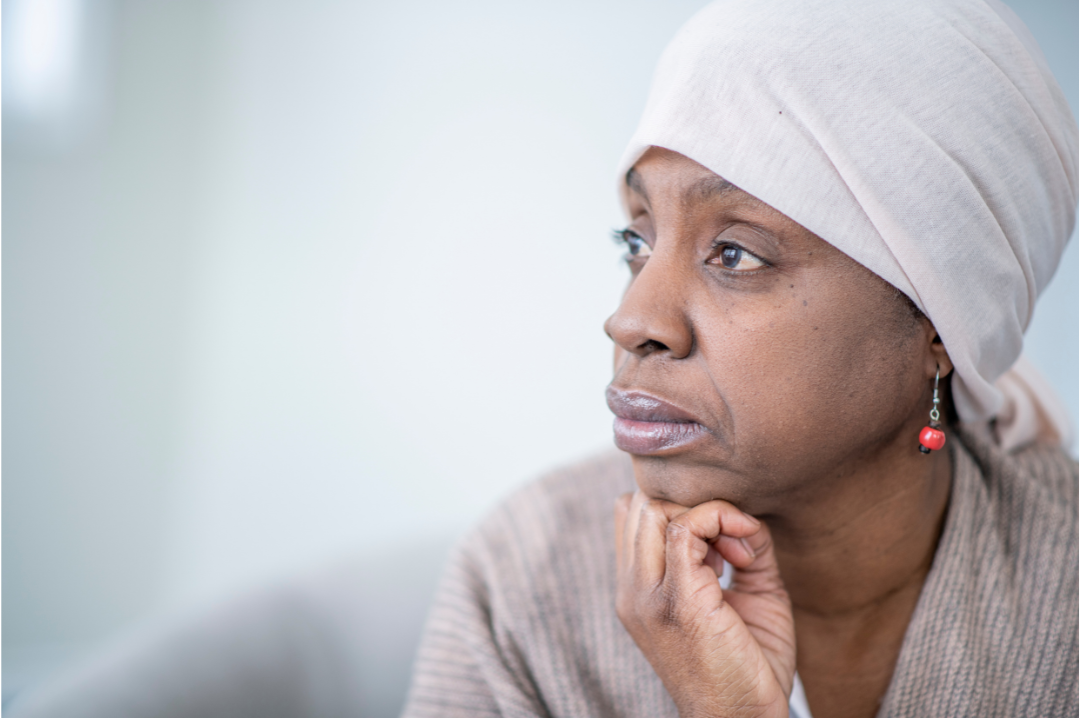
“What if the symptoms you’ve been ignoring are trying to tell you something serious?”
Ovarian cancer develops when abnormal cells in the ovaries begin to grow uncontrollably, forming tumours that can spread within the abdomen and beyond. The ovaries, though small, play a vital role in hormone production and reproduction. When disease strikes this organ, the consequences can be profound, especially because many cases are discovered late, when treatment becomes more complex, and survival chances are reduced.
With about 300,000 new cases and over 200,000 deaths annually, ovarian cancer is one of the most common malignancies afflicting women globally. It is still one of the deadliest cancers, even though it is not the most prevalent. According to GLOBOCAN-based analyses, ovarian cancer incidence rates in Africa are generally below 5 cases per 100,000 women compared with rates exceeding 8–11 per 100,000 in parts of Europe and North America; however, sub-Saharan Africa experiences disproportionately high mortality relative to incidence” (Bray et al., 2013; GLOBOCAN 2020).
Limited awareness, delayed health-seeking behaviour, and restricted access to diagnostic and treatment services all contribute to this pattern. In Nigeria, ovarian cancer is one of the leading gynaecological cancers seen in hospitals, and many women present at Stage III or IV. Most women are diagnosed when the disease has already reached an advanced stage, making effective treatment more difficult and costly.
Ovarian cancer does not always announce itself with dramatic symptoms. Instead, it whispers through the body, making it easy to mistake for less serious conditions. Persistent abdominal bloating or swelling may be attributed to diet or hormonal changes. Feeling full quickly when eating might be dismissed as indigestion. Unexplained weight loss, fatigue, pelvic discomfort, back pain, changes in bowel habits such as constipation, and a frequent urge to urinate can all be brushed aside or self-treated. What makes these symptoms significant is not just their presence, but their persistence. When they occur frequently, feel new, and gradually worsen, they should not be ignored. The body rarely sends repeated signals without reason.
The causes of ovarian cancer are not tied to a single factor but rather to a combination of genetic, hormonal, and lifestyle influences. Women who inherit changes in certain genes known as BRCA1 and BRCA2 face a higher risk of developing ovarian cancer, especially when there is a family history of ovarian or breast cancer. These genes normally function as the body’s natural “repair system,” helping to fix damaged DNA and prevent cells from growing abnormally. However, when they are faulty, this repair process is weakened, allowing damaged cells to accumulate over time and increasing the likelihood of cancer development.
In addition to genetic factors, hormonal influences also contribute to risk. Women who began menstruation early, reached menopause later than usual, or have never been pregnant may have a slightly increased risk. This is because these conditions increase the number of times the ovaries are active over a lifetime, which may increase the likelihood of abnormal cellular changes. Age remains a strong determinant, with most cases occurring in women over 50
years. Obesity and physical inactivity may further increase risk, adding another layer to an already complex disease.
There is no guaranteed way to prevent it entirely. However, several factors have been consistently associated with a reduced risk. Evidence shows that pregnancy, breastfeeding, and the use of oral contraceptives are linked to a lower likelihood of developing ovarian cancer, largely due to reduced lifetime ovulation (National Cancer Institute, 2023). For example, large pooled analyses and epidemiological studies have demonstrated that oral contraceptive use confers a significant and long-lasting protective effect, while breastfeeding is associated with a measurable reduction in risk (Babic et al., 2020). For women with a strong family history, genetic counselling is recommended to assess inherited risk and guide preventive strategies. Eating a balanced diet rich in fruits and vegetables, exercising regularly, and maintaining a healthy weight all help prevent cancer and improve overall health.
However, despite these precautions, alertness remains crucial. Early detection of ovarian cancer, “the silent killer”, is mostly dependent on awareness and prompt medical examination because there is presently no good regular screening test for the disease. Ovarian cancer continues to claim lives not only because of its biology, but because of silence. Silence in homes, in communities, and sometimes even in healthcare spaces. Many women normalise discomfort or delay seeking care due to financial constraints, fear, or lack of information. By the time help is sought, the window for early intervention may have closed.
Changing this narrative requires collective effort. It begins with something as simple, yet powerful, as talking. Talking about symptoms. Talking about family history. Talking about the importance of not ignoring one’s body. Communities, workplaces, churches, and health organisations all play a role in raising awareness and encouraging early health-seeking behaviour. Health systems must also be strengthened to ensure that, when women do present for care, they receive timely diagnosis and appropriate treatment. This is fundamentally giving women the information they need to identify problems and the self-assurance to take appropriate action.
So, the next time your body “whispers”, pause and listen. Do not dismiss it. Do not delay.
Ovarian cancer may be silent, but your response does not have to be. It might save a life – perhaps even your own.
References
1. Bray, F., Loos, A. H., Tognazzo, S., & La Vecchia, C. (2013). Global ovarian cancer health disparities. Gynecologic Oncology, 129(1), 258–264. https://doi.org/10.1016/j.ygyno.2012.12.016
2. Odunsi, K. (2021). An assessment of ovarian cancer histotypes across the African diaspora. International Journal of Gynecological Cancer, 31(10), 1325–1333. https://doi.org/10.1136/ijgc-2021-002711
3. International Agency for Research on Cancer (IARC). (2020). GLOBOCAN 2020: Ovarian cancer fact sheet. Global Cancer Observatory. https://gco.iarc.fr/
Written by: Mrs Ogechukwu Akabuike
Edited by: Dr Abiodun Egwuenu